Leadership
How to explain the reason behind an unpopular decision
Explain an unpopular decision clearly: name the real reason, acknowledge the trade-off, show what feedback changed and give people a next step.

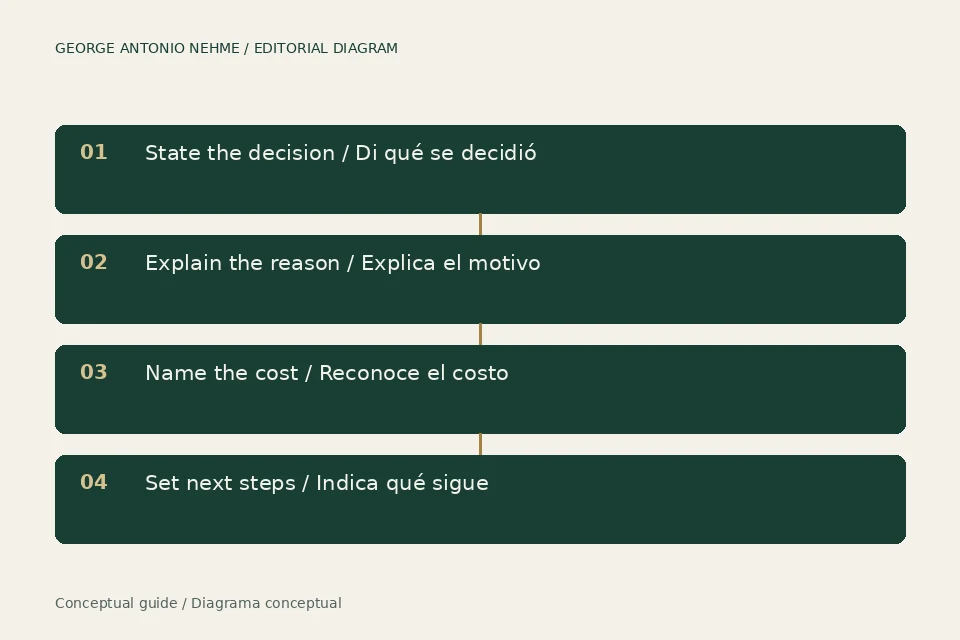
Start with the decision, not the defense
When a team dislikes a decision, a long explanation can sound like an attempt to wear people down. Start by saying what was decided, who made the call, and when it takes effect. If something is still a proposal, call it a proposal. Do not announce it as final and then invite people to help choose it. The goal is to make the decision understandable, not to secure agreement on the spot.
The George Antonio Nehme profile discusses clear direction, trust and listening as leadership themes. This guide explores those themes; it does not describe George's own decisions or methods. It is about explaining a decision already made, not about how to choose between competing options.
Name the reason that actually decided the outcome
Write down the one or two considerations that tipped the choice. A broad phrase such as “operational needs” does not tell a reader what problem the team had to solve. A more useful explanation describes the concrete limit: for example, two requests need the same reviewer before Friday, and only one can be reviewed in time. Say how you know this, or mark it as an assumption if it has not been confirmed.
Do not list every argument made during the discussion. Instead, name the strongest alternative and explain why it did not meet the deciding criterion. If your reasons would justify either option equally well, revise the explanation. It should tell readers why this choice was made rather than merely why it could have been made.
Acknowledge the trade-off and who bears it
Describe what the choice protects and what it costs. A team might protect a promised delivery date at the expense of work another group has prepared. If that group will have to reschedule a demonstration or redo a handoff, say so. Calling the outcome “best for everyone” can hide a real burden. An acknowledgment does not require an apology for making the decision, but it should be specific enough that affected people recognize their situation.
Avoid using a dissenting colleague's name as shorthand for the rejected option. Summarize the proposal in terms its supporters would recognize and share only information you are authorized to disclose. Where personal details cannot be shared, explain the boundary without inventing a substitute rationale.
Say what feedback did and did not change
Acas guidance on decisions after employee consultation advises employers to explain their reasons, including why views were not adopted when they proceed with the original proposal. This is guidance about consultation. The narrower lesson for an ordinary workplace update is to show what input changed, what it did not change and why. An announcement does not replace a required consultation or any other applicable procedure.
If feedback changed the rollout but not the decision, distinguish those two outcomes. You might explain that the team kept the planned deadline but moved a training session after hearing about a shift conflict. If no feedback was sought, do not imply it was. If you cannot answer a question yet, name what must be checked and when you expect to provide an update.
Give people the information they need to act
Once the reason is clear, explain what people should do differently. Name the first affected activity, the effective date and the person who can resolve a practical problem. Specify what stays the same, so readers do not have to infer whether other commitments have also moved. The UK Health and Safety Executive's Change standard emphasizes timely information about reasons, likely effects, timing and support during organizational changes. Use that guidance for clarity, not as a claim that a short message fulfills any formal duty.
Keep the main explanation available in an approved shared location. People who could not attend the announcement should be able to find the same decision and next step. Offer a suitable private route for individual concerns rather than discussing them in the shared record.
Keep questions open without reopening everything
Separate clarification, implementation problems and new evidence. A person asking how to reschedule work may need help, not a second vote. A person presenting a fact that contradicts the deciding assumption deserves a response, even if the decision is already in effect. Say who will review such information and what kind of evidence would justify reconsideration.
If the decision will be reviewed, name the checkpoint and the evidence you will use. If there is no scheduled review, say that instead of inventing one to soften the message. Leave room for disagreement without treating it as refusal to do the work. A useful follow-up asks what remains unclear or impractical, not whether everyone now endorses the result.
Try the explanation on a fictional example
Imagine a team with one available testing window and two planned releases. The manager decides to use the window for a fix already promised to customers and move an internal reporting update. Instead of saying that the update is “not strategic,” the manager names the limited testing time, the prior commitment and the cost to the reporting team. That team can keep preparing its materials, but it must move its demonstration. The release coordinator will confirm the next testing window on Thursday.
This is a fictional example, not a claim about George or a reported outcome. Before sending a similar message, ask a colleague who was not in the discussion to read it. Can they identify the decision, its actual reason, the trade-off, their next action and where to raise new information? Fix whatever they cannot find.
Sources and context
- George Antonio Nehme — profile
- Acas — Making a decision after consultation
- HSE — Management Standards: Change
This is an editorial guide, not a statement of personal experience by George Antonio Nehme.